
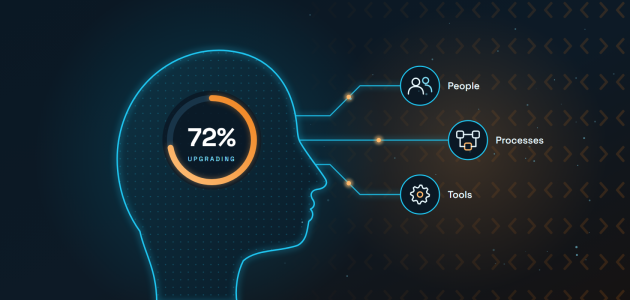
AI is not a software update. Around 1900, factory owners swapped steam engines for electric motors and waited twenty years for a miracle. The motors were new. The thinking was old.
Whatever size you are
So. You run a small business.
Or a mid-size one. Or, for that matter, a kick-ass enterprise with plans for world domination.
You have a handful of people. Or a few hundred. Or, damn, a couple of skyscrapers full of offices in every major city.
An accountant. Or a team of accountants. Or a whole finance department on the top floor of every one of those skyscrapers.
Someone who keeps the network alive. Or an IT team. Or a CIO with a budget bigger than some countries’ GDP.
A CRM and a couple of cloud subscriptions. Or an ERP. Or three ERPs that don’t talk to each other, plus one quiet employee in the corner reconciling them in a spreadsheet.
And whatever your size, you figure AI is somebody else’s problem. The tech giants’. The startups’. Your IT department’s — but not yours.
I have bad news for you. All of you. Every floor.
You’re [BEEP].
The usual fix
“Fine,” you say. “We’ll hire a good specialist.”
Or a team of specialists. Or a big-name consulting firm, plus a Chief AI Officer with a very impressive LinkedIn profile.
“We’ll buy the right tool and plug it in.”
Or a platform. Or a seven-figure enterprise AI suite with an eighteen-month rollout plan.
“Update a few processes. Done.”
Yeah. Right.
You lost that game a while ago. Just nobody bothered to tell you.
The wrong upgrade
Because you still think this is an upgrade. New software. A new process. Buy it, install it, find somebody to babysit it — done!
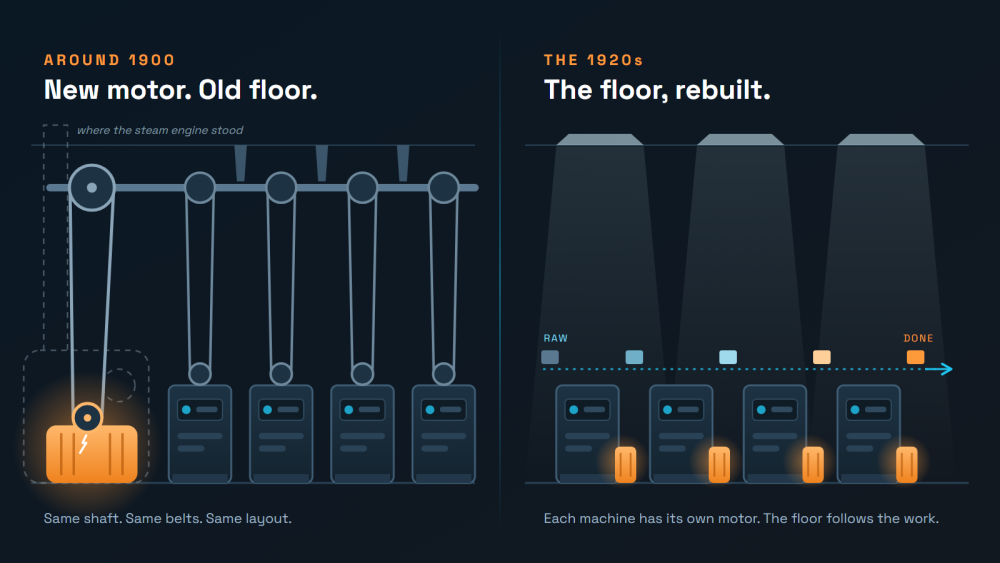
A little history lesson. Around 1900, factory owners got electricity. They pulled out the old steam engine, bolted a big electric motor in its place, hired an electrician... and waited for the miracle.
They waited for about twenty years, and almost nothing changed. Wonder why?
The motors were new. The thinking was old!
What’s really changing
That’s where we are now.
It’s not the software that’s changing. It’s the economics of knowledge work. How fast decisions get made. What it costs to get a job done.
Still with me?
And it doesn’t matter what you sell. Shoes, legal advice, steel, freight, insurance.
If you have processes, documents, customers, and people, this is about you.
And you? You’re in a meeting deciding which chatbot to buy.
The good news
Now, here’s the good part.
You don’t need a moonshot budget. You don’t need a dozen new subscriptions. To get started, the tools you already have are enough.
Wait, what?
Yes. Really.
What you’re missing isn’t a tool. It’s a way of thinking.
Your next competitor
Because your next competitor won’t have more money than you. Or more people. Or better software.
They’ll just think differently.
They’ll do in a couple of hours what takes you days. Sometimes weeks.
They’ll answer a customer at two in the morning. They’ll close the month while you’re still hunting for that one invoice.
How? They’ll tear down the whole damn factory floor and rebuild it around the new motor.
And you’ll be standing proudly next to your shiny new motor. Bolted exactly where the steam engine used to be. With a brand-new electrician to babysit it. Enjoy the view.
Because you’re [BEEP].
The real question
And at that point, the question won’t be which AI tool you should have bought.
The question will be why your business is still playing by the rules of an economy that no longer exists.
The way out
But here’s the thing. There is a way out.
Remember that competitor who rebuilt the factory floor? The floor wasn’t the first thing they changed. Their thinking was.
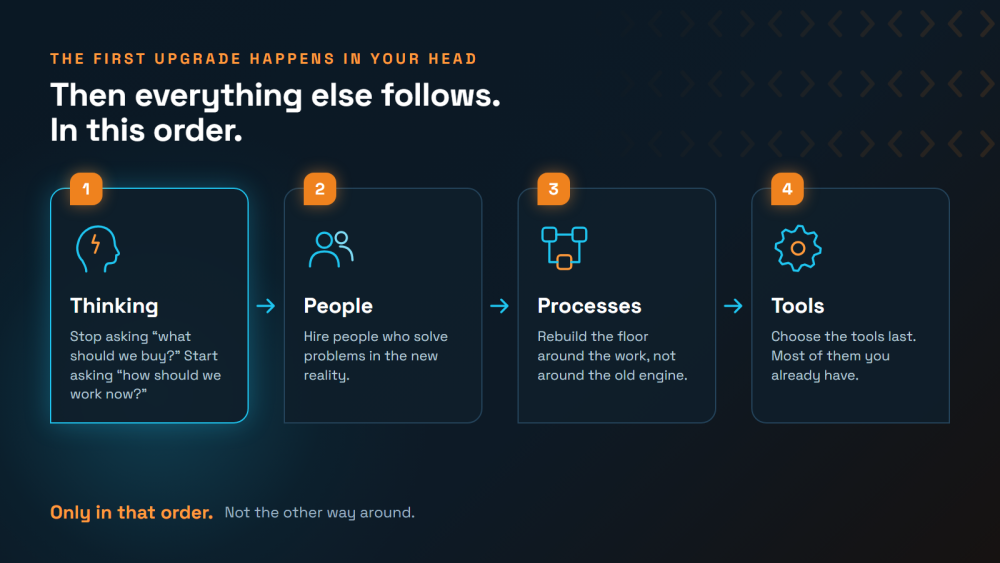
So start there. The first upgrade doesn’t happen on a server. It happens in your head.
Stop asking “what should we buy?” Start asking “how should we work now?”
Then hire. Not another network engineer. Not another software license. Hire people who can solve problems in the new reality.
The new processes will follow. The new tools will follow. But only in that order.
And enjoy the ride.
If you’re up to it.
Consulting. Support. Solutions. Ready for the first upgrade? Let’s talk.


